4D volumetric capture with Gaussian Splatting
We record people and scenes in motion with 120 synchronized cameras and turn them into volumetric video you can watch from any angle.
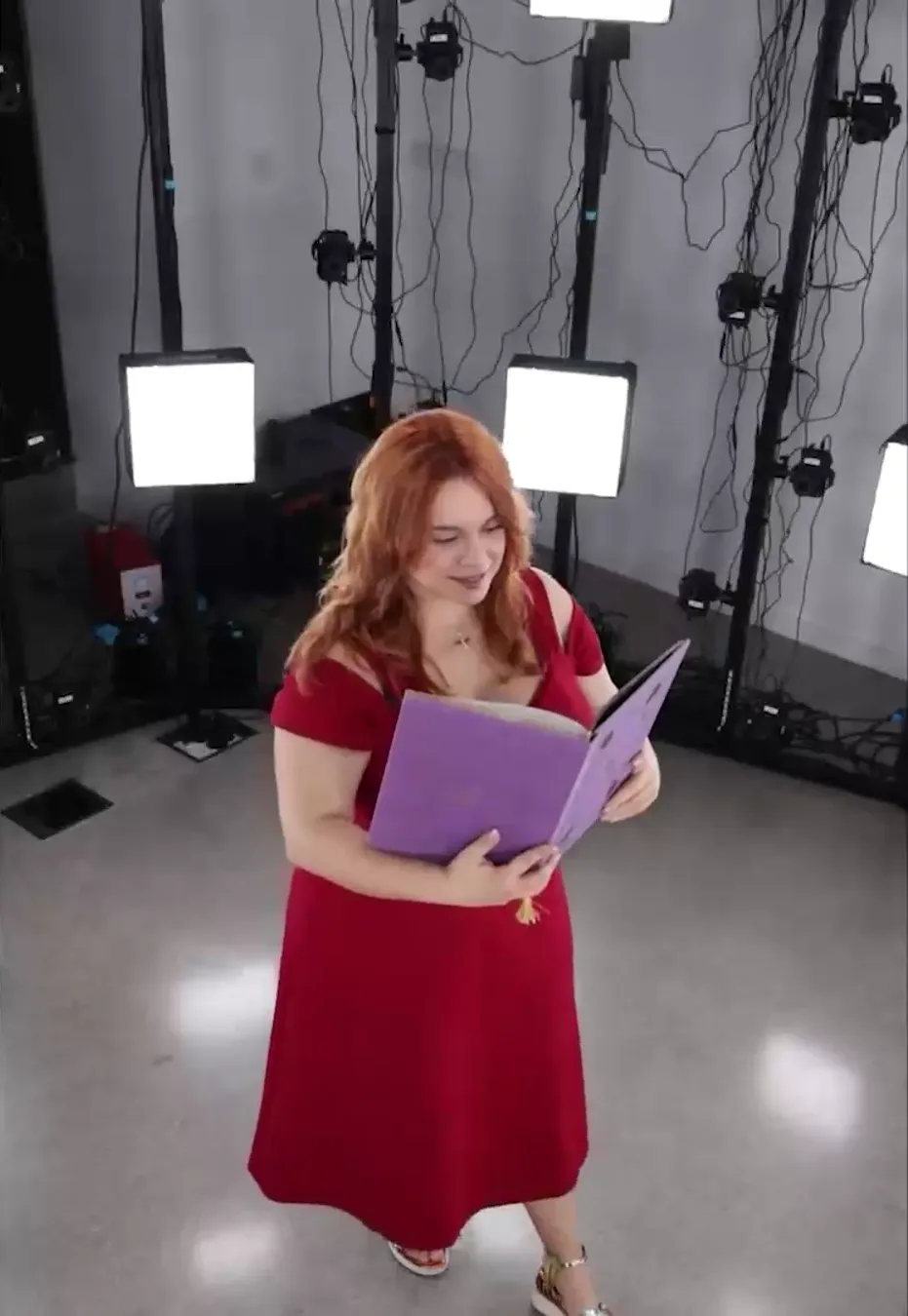
What 4DGS capture is
4D Gaussian Splatting (4DGS) is the dynamic version of Gaussian Splatting. Instead of reconstructing a still object, it reconstructs a whole performance over time: every instant of the scene is represented by millions of Gaussians that store position, shape, color and opacity.
The result is volumetric video. The viewer can move the camera, walk around the performer and look from any point, keeping the fine detail other techniques tend to lose, such as hair, clothing and soft edges.
120synchronized cameras
They all record at the same time, so every instant of a take is captured from 120 viewpoints. That is what 4D reconstruction needs.
A 4DGS scene recorded in our rig
A footballer captured in our Valencia studio. Tap the scene to rotate it and see it from another angle.

How a 4D capture works
- 01
Preparation
We agree with you on what will be recorded, how long the takes are and where the result will be seen, because the destination shapes the whole processing.
- 02
Recording in the rig
The performer or scene is recorded inside the 120-camera synchronized rig in our Valencia studio.
- 03
4DGS reconstruction
We process the takes with our Gaussian Splatting pipeline and generate the volumetric scene in motion.
- 04
Optimization and delivery
We adapt the result to the target platform and deliver it ready to integrate, with technical support during integration.
Where it can be seen
Web
WebGL and WebGPU viewers to show the capture on a page, a campaign or an online store, with nothing to install.
Virtual and augmented reality
Real people inside immersive experiences, which the viewer can walk around and look at up close.
Unreal Engine and Unity
Integration into real-time engines for video games, virtual production and interactive installations.
Film and VFX
Performers and scenes captured in volume, so shots can be composed with free camera moves in post-production.
What it is used for
- Sports
- Motion analysis and volumetric replays.
- Fashion
- Runway and digital fitting with the garment in motion.
- Film and VFX
- Capturing performers and scenes to place them in 3D environments.
- Education and science
- Visualizing the human body and human movement.
4DGS compared with mesh-based volumetric video
Traditional volumetric video turns every frame into a textured polygon mesh. It fits classic 3D pipelines well, but it simplifies fine detail.
4DGS does not build surfaces: it represents the scene with semi-transparent Gaussians. That is why it keeps hair, fabric, soft edges and reflections better, and looks closer to the original footage.
Worth knowing: lighting is recorded with the scene, so it should be planned around where the capture will be integrated. Files are also heavy, so each platform needs its own optimization.
Keep reading
Have a project in mind?
Tell us what you want to capture and where it will be seen. We will propose how to do it.
Get in Touch